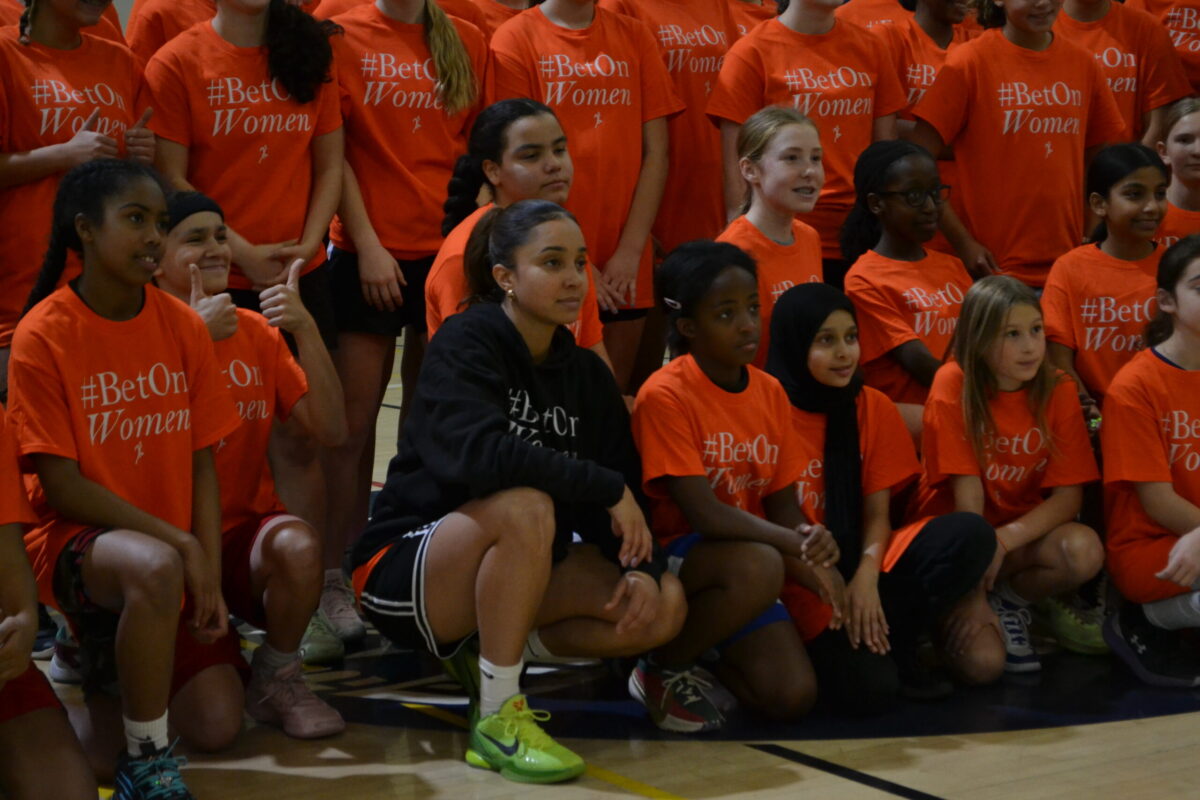
Having experienced firsthand the power of mentorship and representation, Kayla Davis discusses the importance of inclusive leadership, grassroots investment, and creating environments where every athlete has the opportunity to thrive.

What first inspired your passion for building more inclusive pathways in sport?
For me, it really started with a lack of role models growing up. I wanted mentorship from someone who looked like me, sounded like me, and could actually speak to the journey in a real way.
I still remember when college athletes would come back and talk to our team. I’d be so excited. It was one of those moments where you’re just thinking, “I want to be like them, I want to impress them.” It made everything feel a lot more real.
And I’ll never forget going to a Tammy Sutton-Brown camp and meeting a WNBA player for the first time. I remember just looking at her and saying, “You’re so tall, I don’t know if I can make it to the pros.” And she just calmly told me there were plenty of players my height and I absolutely could.
I didn’t even know what to say after that. I just remember walking away thinking, “okay, this is actually possible.” That moment really stuck with me.
Why is high-performance development access so important early on?
Early and affordable access is everything, but I think the high-performance side is what really shapes long-term development.
I grew up playing a lot of street basketball with the boys for hours. That’s really where I fell in love with the game. It taught me creativity, toughness, just how to play freely. I was also discovered on the playground at school when a teacher told my dad I was giving the boys a run for their money.
But the technical side of my game, and my understanding of basketball, really came later when I started getting more structured coaching. That’s when things like spacing, reads, decision-making, and game IQ actually started to click for me.
Looking back, I often think how powerful it would have been if those two things came together earlier. The creativity from street basketball plus structured high-performance training would have put me so much further ahead. That’s why access matters so much to me.
How do programs like ForHerFuture help build confidence on and off the court?
A lot of this comes back to my own experience. Growing up, I didn’t really have many role models who looked like me or could break the game down in a relatable way. So those moments when someone came to speak to our team, or when I met my first WNBA player, they really stayed with me.
That’s why I care so much about teaching the game in a way that’s digestible for young women at all levels. I know what it feels like to be in those early stages, trying to figure things out, and just needing someone to believe in you and simplify things so it actually makes sense.
For me, it’s really about speaking life into athletes, being patient, and being empathetic in how I coach. I always think about my younger self in those moments, because I remember how unsure I felt but also how much potential was there.
And I think programs like ForHerFuture are about creating that environment where girls feel seen, supported, and just more confident in who they’re becoming.
What does building a true sense of belonging look like in practice?
For me, it starts with access. Making sure athletes and families who don’t always have the resources still have a real way into the game. Because talent is everywhere, but opportunity isn’t always equal.
It also comes down to the environment you create. Belonging isn’t something you just say, it’s something athletes feel the moment they walk into a gym.
I think coaches who reflect different backgrounds and demographics play a big role in that too. When athletes see leadership that reflects parts of themselves, it changes what they believe is possible.
And then it’s the day-to-day stuff. How you’re coached, how mistakes are handled, whether you feel supported or like you’re being judged. That’s what actually builds belonging.
How important is representation in leadership and coaching?
It’s extremely important, and I think it really connects to everything around access and belonging.
When you look at leadership today, a lot of women who are CEOs or in senior roles have played sport in some way. And I think that matters. Sport teaches you discipline, resilience, teamwork, accountability, and how to lead under pressure. Those things translate directly.
But representation is also about race and demographics. Young athletes need to see people from different backgrounds and lived experiences in leadership positions. It shapes what they believe is possible for themselves.
For me personally, I was a very shy young girl. I barely spoke to coaches growing up. I didn’t always see people who looked like me in leadership roles, and I think that does shape you at that age.
But sport really changed that for me. It gave me confidence, it gave me a voice, and it helped shape who I am as a leader.
Now I’m on the other side of it, running programs and building spaces in sport. And I always think, if I could go from that shy kid to where I am now, then I know other young girls can absolutely do the same.
What changes have you seen in girls’ basketball and where are the biggest opportunities moving forward?
The growth has been really exciting. You can feel the level of skill, exposure, and investment in girls’ basketball rising year over year.
At the professional level, there’s still a significant pay gap. The average WNBA salary is still in the low six figures, while NBA salaries are in the multi-millions, so there’s still a long way to go in terms of equity.
At the same time, NIL has been a really important shift. Since it came in 2021, female athletes now have access to sponsorships and brand deals in a way that didn’t exist before, and women’s basketball players have become some of the most visible athletes in that space.
But I think the biggest opportunity is still at the grassroots level. More access, more funding from governing bodies, and more consistency in coaching and development. Right now, there are still too many gaps depending on where you grow up or what resources you have.
So for me, it’s really about tightening the whole system from the ground up. If we fix access early, continue building at the college level, and keep pushing equity professionally, the game is only going to keep growing.
Follow Kayla Davis on Instagram,
www.instagram.com/kayladavis_5

