True North Living

Sport has long been described as a universal language. It teaches teamwork, resilience, leadership, and belonging. It has the power to unite communities, bridge differences, and inspire generations.
But for many Canadians, sport has not always lived up to that promise.
Racism, discrimination, financial barriers, underrepresentation, and unequal access continue to shape who gets to participate—and who gets left behind. Earlier this year, the Future of Sport in Canada Commission’s Final Report called for significant transformation across the sport system, issuing 98 Calls to Action to create a safer, more accountable, inclusive, and accessible future for all Canadians.
The evidence reinforces this urgency. Statistics Canada reports that racialized individuals are three times more likely to experience unfair treatment in sport, while more than one in ten have stopped participating because of those experiences. The 2026 MLSE Foundation Change the Game Report further found that Black youth are twice as likely to experience unsafe hazing or bullying in sport environments.
These statistics represent more than numbers. They reflect individuals who have been excluded from opportunities, leadership pathways, and environments where they should feel they belong.
At the Inclusion in Canadian Sports Network (ICSN), we believe sport can and should be different.
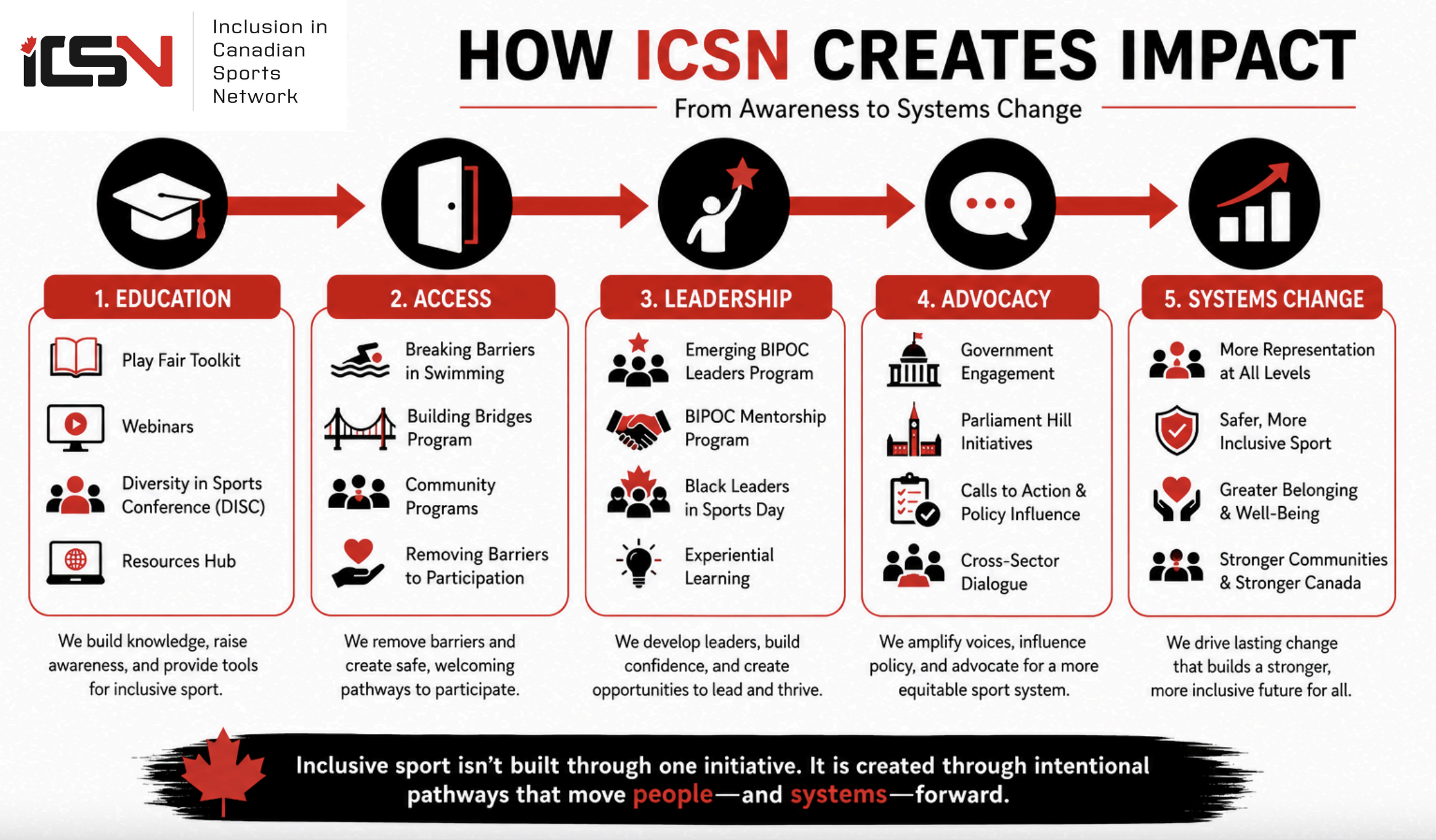
Founded to advance equity, accessibility, and representation across Canadian sport, ICSN has grown into a national network connecting athletes, coaches, administrators, educators, policymakers, community organizations, and emerging leaders to create meaningful change from the grassroots to the boardroom.
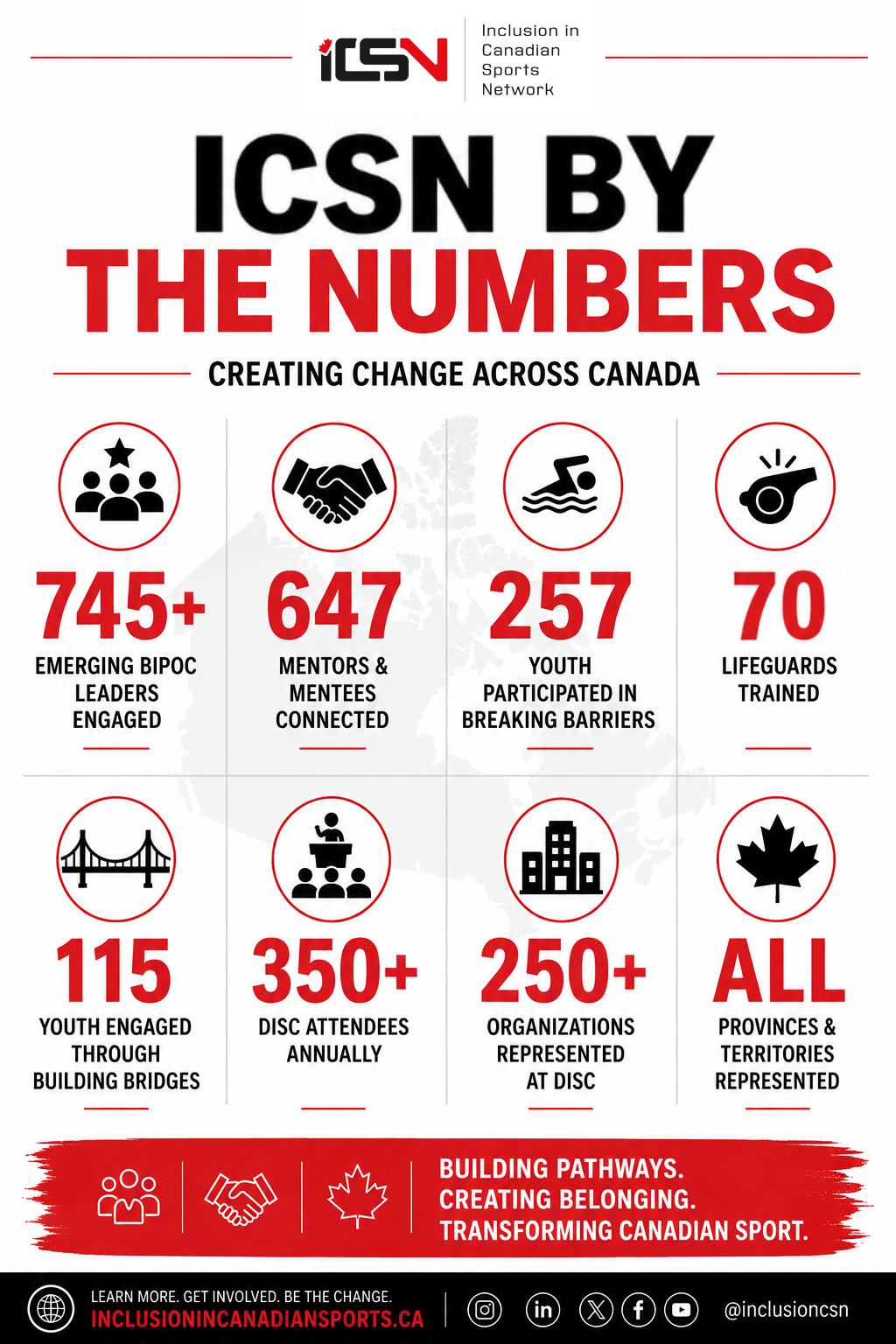
Through our Emerging BIPOC Leaders Program, more than 745 young leaders have participated in mentorship, educational seminars, networking opportunities, and experiential learning designed to prepare the next generation of sport leaders.
Our BIPOC Mentorship Program has connected 647 mentors and mentees since 2020, helping emerging professionals build confidence, expand networks, and navigate careers in coaching, governance, media, and sport administration. Representation matters—and 95 percent of mentees reported that having a mentor who looked like them was important to their development.
ICSN’s impact also extends to community programming.
Through Breaking Barriers, we are helping create more accessible pathways into sport participation. The initiative has engaged 257 youth participants, trained 70 lifeguards, and supported the development of future coaches, demonstrating how intentional programming can reduce barriers and increase representation.
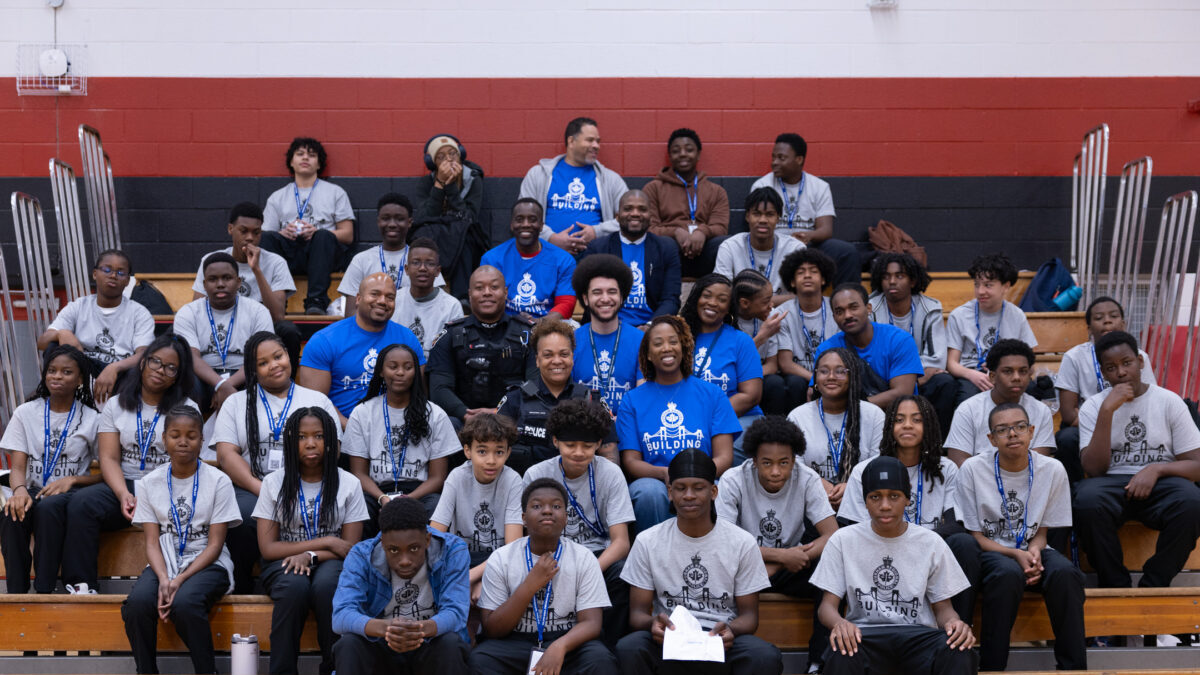
Similarly, Building Bridges uses sport as a platform to foster trust, mentorship, and dialogue between Black youth and law enforcement. By creating opportunities for meaningful connection and understanding, the program demonstrates how sport can strengthen relationships both on and off the playing field.
At the systems level, ICSN convenes national conversations through the Diversity in Sports Conference (DISC)—Canada’s largest diversity-focused sport conference. DISC brings together leaders, organizations, educators, and advocates from across the country to share knowledge, challenge existing practices, and collaborate on solutions that move the sector forward.
The network’s work also includes advocacy and policy engagement. Through initiatives such as Black Leaders in Sports Day, ICSN has created opportunities for sport leaders to engage directly with government representatives, helping ensure that lived experiences inform future decision-making and policy development.
Many of the priorities outlined in the Future of Sport in Canada Commission’s Final Report—including inclusive participation, leadership development, accountability, and collaboration—reflect the work ICSN has been advancing for years.
Yet creating an inclusive sport system cannot depend on a handful of organizations or individuals.
It requires collective action.
It requires intentional investment.
And it requires a commitment to ensuring that everyone—regardless of race, background, identity, or circumstance—has the opportunity not only to participate, but to lead.
Inclusive sport is not about lowering standards. It is about expanding opportunity.
Because when more people have the chance to contribute, lead, and thrive, sport becomes stronger.
The future of Canadian sport will be shaped by the choices we make today.
The question is no longer whether inclusion matters.
The question is whether we are prepared to build a sport system where everyone truly belongs.
Join the movement to build a stronger, more inclusive sport system in Canada.
Learn more about ICSN’s programs, access resources, attend upcoming events, or explore partnership opportunities at www.inclusionincanadiansports.ca.
Together, we can create a future where every person sees themselves reflected, respected, and empowered through sport.