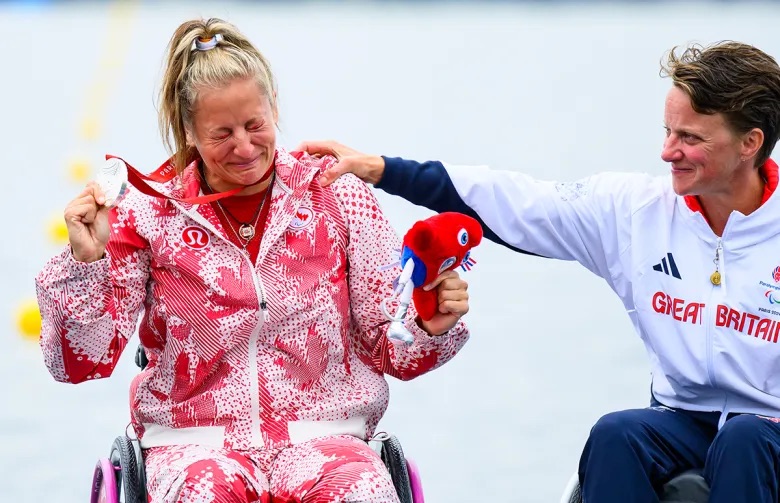
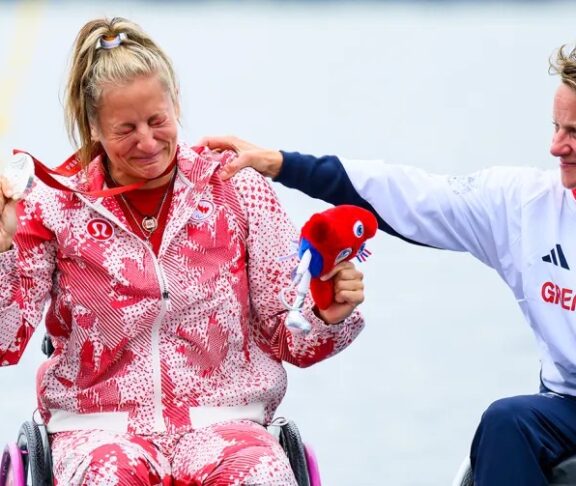
Paralympic silver medallist Brianna Hennessy shares how sport transformed her life and why Canada must invest in para-athletes.

You’ve had a remarkable journey from a life-changing accident to becoming a Paralympic silver medallist. Wow did sport help you become who you are today?
Sport saved my life, truly. After my accident in 2014, I woke up to the reality that I was now catastrophically impaired for life, and everything I’d known as an athlete before was suddenly stripped away from me. But the resilience I learned from years of competing in hockey, rugby, ball hockey, soccer, and boxing at provincial to national level became the foundation I leaned on during rehab.
Para sport gave me back a sense of identity, purpose, and possibility. It reminded me that even though my life had changed, I was still an athlete at my core. Training again, first in wheelchair rugby, then in paracanoe and parakayak, helped me rebuild not just my body, but my confidence, independence, and my belief that I could still chase big dreams. Winning a Paralympic silver medal in Paris was a moment that proved to me, and hopefully to others, that you can rise from the hardest chapters of your life and write new ones.
You began para canoe only a few years before competing at the Paralympics. What does that rapid progression say about access to opportunity and the importance of trying new sports?
My journey into paracanoe was almost accidental, as wheelchair rugby had shut down during the pandemic. My Ottawa Stingers coach and wheelchair rugby legend paralympic medalist. Patrice Dagenais suggested I try paddling.
Less than two years later, I qualified for Tokyo, and three years after that, I won silver in Paris. That kind of progression doesn’t happen without access, incredible support from my team, and someone opening a door for you.
But remember, I had been an elite athlete my entire life. There is sometimes a misconception that just because you are a person with disabilities, you can just sign up and be a Paralympian. This is far from the case!
I was a multisport athlete at a high level since I was a kid, and my tool belt was already well equipped with discipline, teamwork, resilience, a strong work ethic, consistency, and extensive experience performing under high pressure and expectations. My rapid progression in paracanoe isn’t a story about “picking up a sport quickly.” It’s a story about an elite athlete being given access to the right environment.
There’s a misconception that becoming a Paralympian is somehow “easier” or that we’re just inspirational stories. That narrative downplays the reality. We are high‑performance athletes first. We train just as hard, often harder, because we’re managing disabilities, medical needs, equipment challenges, and systemic barriers on top of elite sport.
My progression shows what happens when an athlete with the right potential finally gets access to proper coaching, equipment, and opportunity. It’s not about disability. And there are countless other athletes with disabilities across Canada who could rise just as fast, if they were given the same chance.
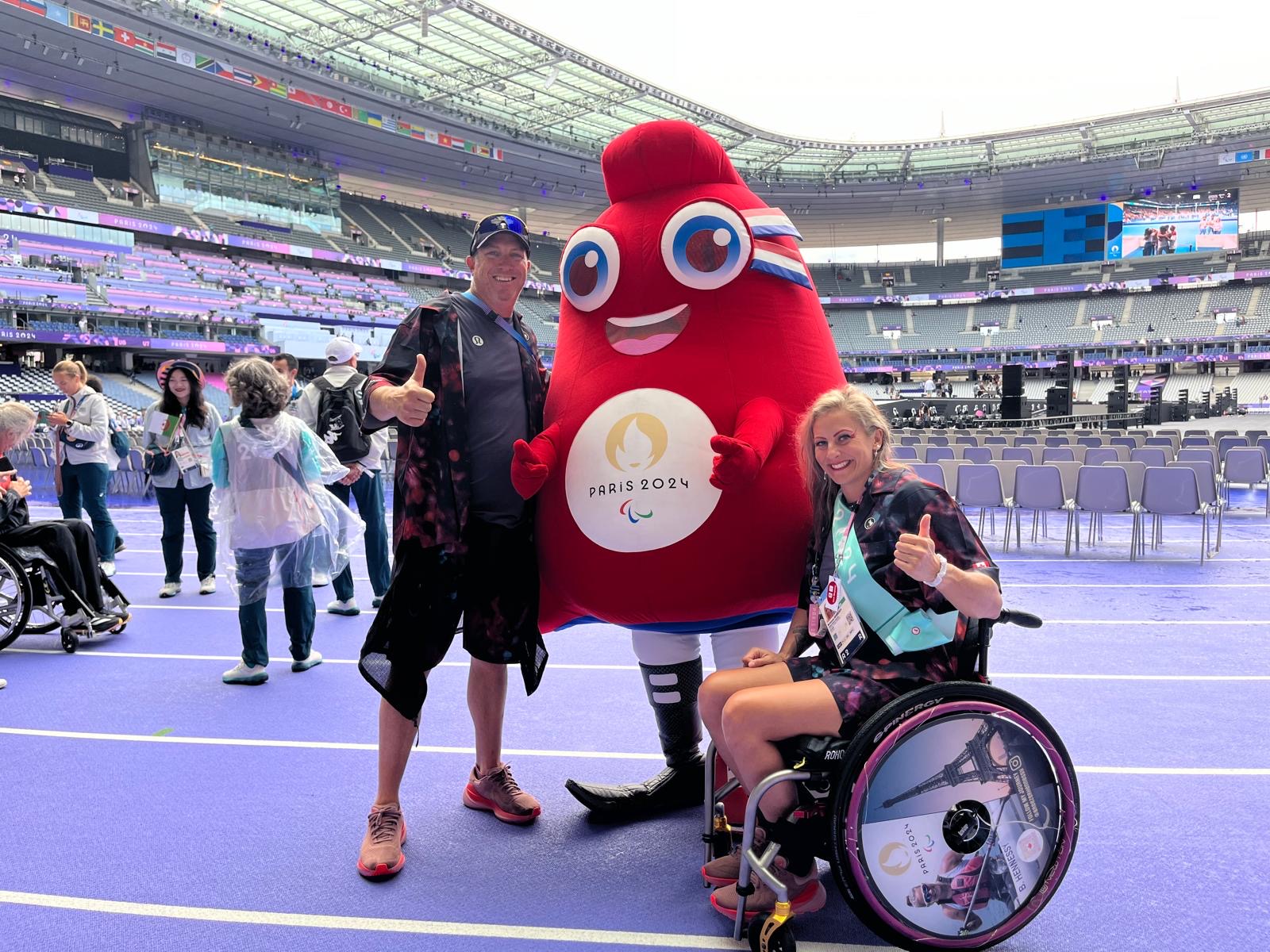
What barriers still exist for Canadians with disabilities who want to get involved in sport, whether recreationally or competitively?
The biggest barriers aren’t motivation or ability. They’re systems that weren’t built with us in mind. Such as:
- Attitudinal and systemic barriers
- Equipment that costs more than most people’s cars
- Facilities that claim to be accessible but aren’t in practice
- Coaches who want to help but don’t have para‑sport training
- Transportation gaps that make simply getting to practice a challenge
- Medical support while at home or when going away to any training camps or competitions, physio, or adaptive services or custom equipment development
- A lack of clear pathways, or financial support, especially for women entering para‑sports like sledge hockey or women’s wheelchair rugby where the men’s counterparts are in the Paralympics, so all the funding goes to their programs, so it makes it hard to develop it on the women’s side.
- Limited visibility, so people don’t even know what sports exist for them or where to get support to even try them
- Lack of funding/access to basic one-on-one strength training or coaching that paras often need for the extra safety or dependence on our coaches during training. We are also often in decentralized environments or have no additional support when not close to a CSI centre
- We also lack interest from Canadians and businesses to sponsor us.
I am a 16x world medalist for Canada in three different para sports, the 2024 co-flag bearer for Canada in Paris, a 2x Paralympian, the first to ever medal silver at the Games in my sport for our country, one of the few athletes who competed at the Games in two different sports, and I still can’t get sponsors.
I get offered free products or one-off media events. I have a sponsorship package that we have tried to connect with countless companies. Nothing.
I am one second off a gold for Canada. Trying to keep the dream alive to even make it to LA. I may have to quit by the end of this year, because I cannot afford to pay my coach. It’s so sad. It breaks my heart because I have proven my potential is there. But without enough funding to propel me forward, it’s all a dead end.
I made it to world cup in Germany May 2026 to win a medal for Canada, because of the Canfund grant. Canfund saved me again from having to quit. I don’t know what I’d do without their belief in me and financial support. Donate to our Canadian athletes today.
Representation matters. How important is it for young athletes with disabilities to see para sport representation on the world stage?
Representation is powerful because it changes what people believe is possible for now and the next generation.
When young athletes with disabilities see us on the world stage, they’re not just watching a race, they’re seeing a future they didn’t know they could have. Growing up, I didn’t see athletes who looked like me. I didn’t see women in wheelchairs on podiums. That absence shapes your expectations.
Every time a para‑athlete is televised, celebrated, or recognized, a young person somewhere is realizing, “I’m not alone. My disability doesn’t disqualify me. There is a place for me in sport too.”
Representation doesn’t just inspire. It opens doors for physical health, mental health, rehabilitation, and recovery. It creates a safe place where everyone can belong and feel loved and accepted.
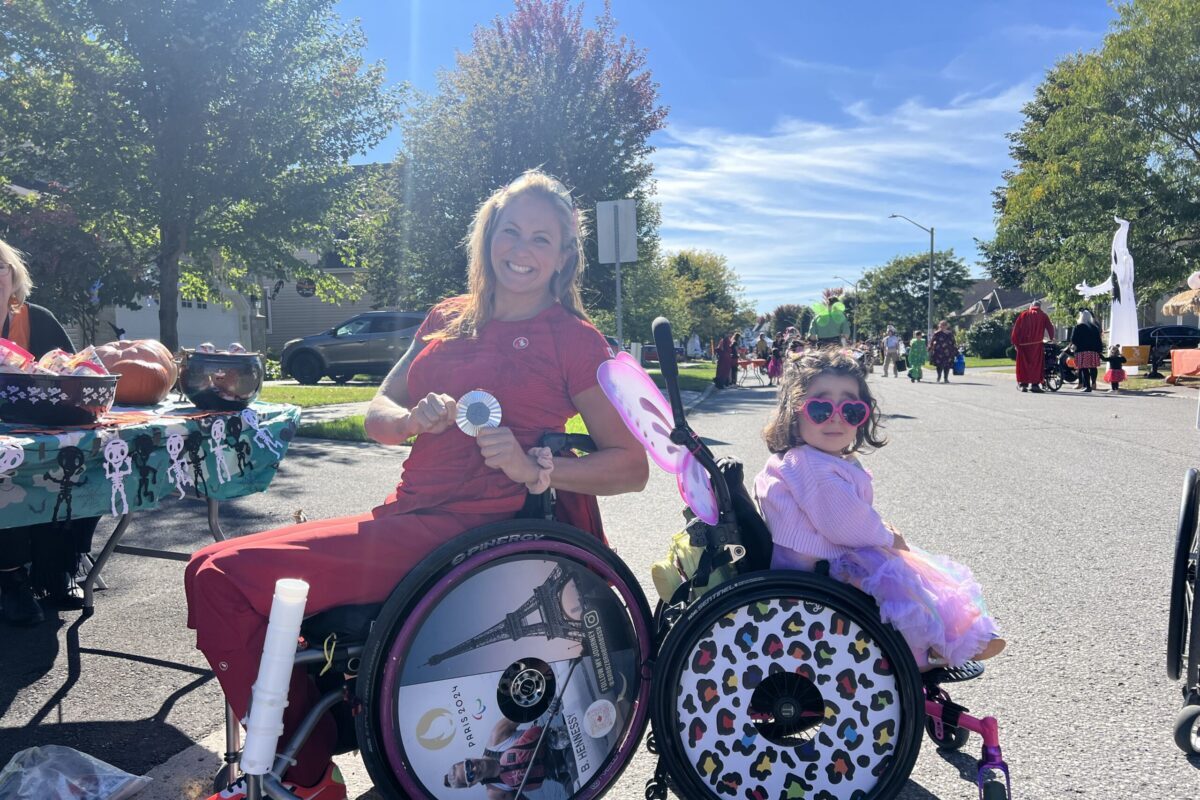
You’ve spoken about the strong sense of community within para sport, how has that support system shaped your journey and success?
The para‑sport community rebuilt me. After my injury, I lost the identity I had built through sport. Para‑sport didn’t just give me a new athletic path — it gave me a family. People who understand the medical challenges, the equipment struggles, the emotional ups and downs, the resilience it takes to show up every day that your unpredictable health allows it.
The para community has carried me through it all and built me back up. My success is not mine alone. The farthest thing from it. It’s the result of an absolutely incredible community, that refuses to let anyone fall behind or by the waist-side. We lift each other up, we celebrate each other, and we push each other to be the best versions of ourselves.
If you could give one piece of advice to organizations or governing bodies trying to make sport more inclusive, what would it be?
Listen to disabled athletes, or people with disabilities and act on what they tell you. Consult us first, prior to making any decisions that will affect us. Include us. If you have a board for any company or any sport, how can you make any decisions without having someone living with disabilities on it too? Without our consultation. This is not inclusivity.
Just a few of many things that would help to consider:
- Para Athlete‑led design: bring disabled athletes into the room before decisions are drafted, not after.
- Advise from firsthand lived‑experience expertise: decisions are grounded in real barriers, real training and custom and medical demands, real bodies, real equipment.
- Equity‑based funding: resource para‑sport according to actual cost of participation, not according to able‑bodied templates.
- Accessible pathways: create entry points that don’t require athletes to already have equipment, transportation, or medical support.
- Transparent communication: clear timelines, clear criteria, and clear expectations so athletes aren’t left guessing
- Adaptive equipment and medical support to participate and excel: recognize that participation often depends on specialized gear that is expensive, custom, and medically necessary
Learn more at ottawarivercanoe.com

