
Creating inclusive sport environments requires more than good intentions–it takes accountability, training, and practical tools.
Sport is often celebrated as a place where people come together, build community, and learn valuable life skills. While sport has tremendous potential to foster belonging, inclusion does not happen automatically. For many Indigenous, racialized, newcomer, and religious minority participants, barriers continue to shape their experiences and challenge the idea that sport is naturally inclusive.
Those barriers can take many forms. Some are visible, such as discriminatory comments or unequal access to opportunities. Others are more subtle, including a lack of representation among coaches and leaders, assumptions about culture or language, or environments where participants feel pressure to fit in rather than feel they truly belong.
“There are many realities that challenge the idea that sport is naturally inclusive,” says Jason Miller, Executive Director of Baseball Manitoba. “Financial, geographical, cultural, and racial barriers all continue to affect who can participate and how welcome they feel.”
When sport isn’t an equal playing field
The impact of exclusion extends beyond participation rates. Experiences of racism, discrimination, and hate can affect athletes’ confidence, mental well-being, sense of safety, and long-term connection to sport. When individuals feel a lack of respect and representation, they are less likely to remain involved, limiting both personal opportunities and the diversity that strengthens sport communities.
Research commissioned by Sport Newfoundland & Labrador found that many participants from underrepresented communities continue to encounter discrimination, exclusion, cultural barriers, and unequal access to opportunities.
“The research shows that inclusion isn’t automatic—it requires intentional effort, accountability, and a commitment to ensuring everyone feels welcome, respected, and valued in sport,” says Troy Croft, Executive Director of Sport Newfoundland and Labrador.
Creating meaningful changes requires more than statements of support. Organizations across Canada are increasingly recognizing that good intentions alone do not remove barriers.
“Meaningful change begins when inclusion moves beyond statements and becomes embedded in everyday practices, policies, and decision-making,” says Marianne Parent, General Director of Réseau Accès Participation. “Organizations must be willing to listen to lived experiences, identify gaps, and continuously improve.”
Turning awareness into action
Education plays a critical role in working towards true inclusion. Many forms of racism in sport are not always intentional or immediately recognized, making training and awareness essential for coaches, administrators, volunteers, and leaders.
According to Parent, organizations are increasingly seeking practical resources to help facilitate conversations, respond appropriately to incidents, review policies through an equity lens, and create safer environments for participants from diverse backgrounds.
This is where Anti-Racism in Sport Canada (ARISC) is helping drive change. As a national leader in anti-racism education, training, and policy support, ARISC works with sports organizations, community groups, and partners across Canada to address racism and build more inclusive sport environments.
“Sport has the power to unite people across backgrounds, cultures, and communities—but inclusion doesn’t happen by accident. It requires intentional leadership, education, and accountability. Through Sport Without Hate, ARISC is working alongside partners across Canada to equip sport organizations with the tools and knowledge they need to create environments where everyone feels safe, respected, and that they truly belong.”
Moji Akande
Anti-Racism in Sport Canada (ARISC)

Through its Building Sport Without Hate initiative, ARISC provides bilingual training, educational resources, anti-hate and bystander intervention models, public awareness campaigns, and organizational support designed to move sport beyond awareness and into measurable action.
“Education is a key component of addressing racism in sport because it brings awareness to everyone about the realities of different forms of racism,” says Miller. “It allows people to consider the impacts on others and learn why acceptance and reconciliation are the path forward.”
Building sport without hate across Canada
Creating lasting change requires collaboration among sport organizations, governments, educators, community leaders, coaches, parents, and participants. When inclusion is prioritized, sport becomes stronger, participation grows, and communities become more connected. For organizations looking to move from intention into action, now is the time to engage.
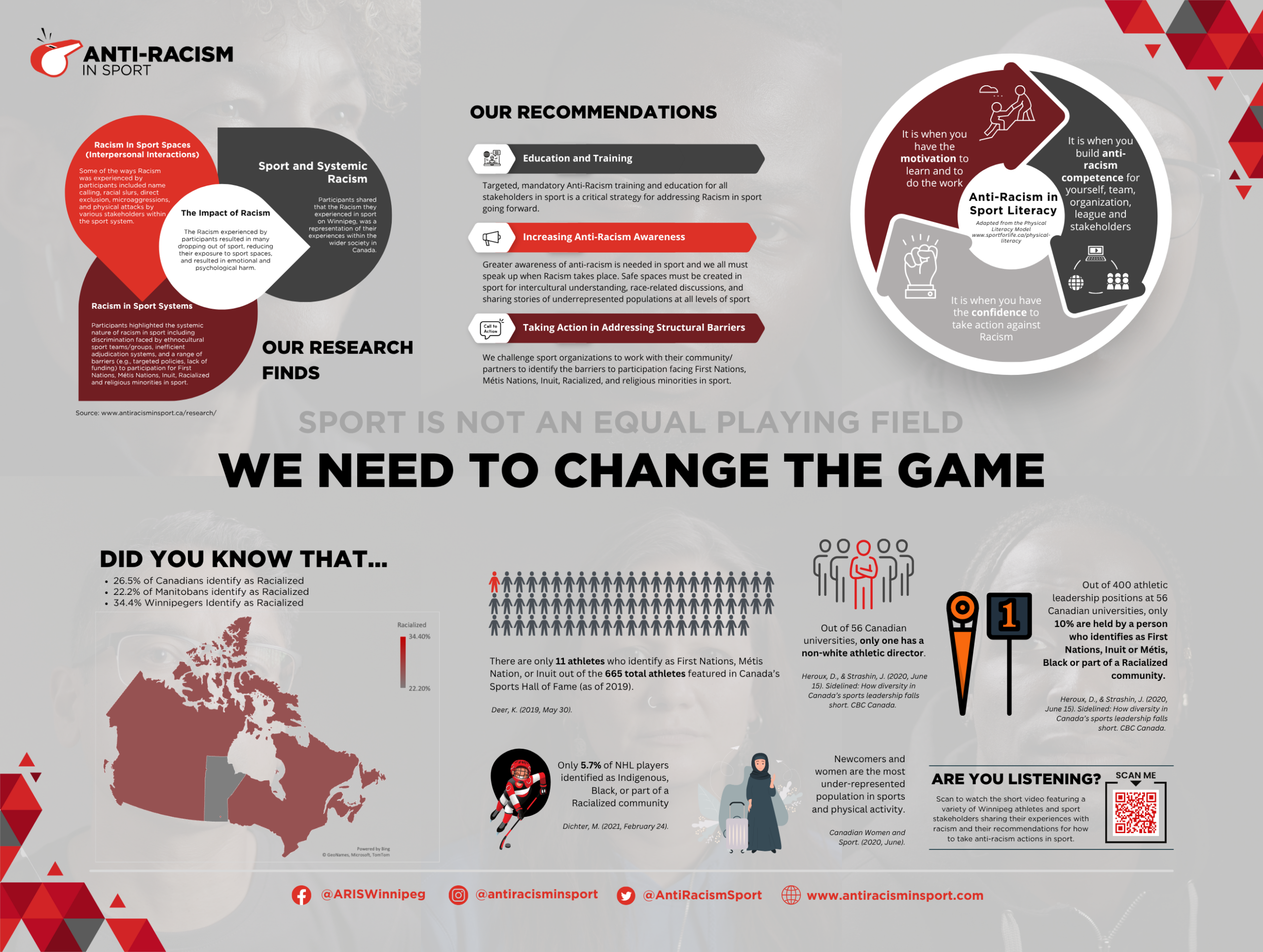
Explore ARISC’s training opportunities, practical tools, and educational resources, and learn how your organization can help build a future where every participant feels safe, valued, and welcome in sport at antiracisminsport.ca.

